
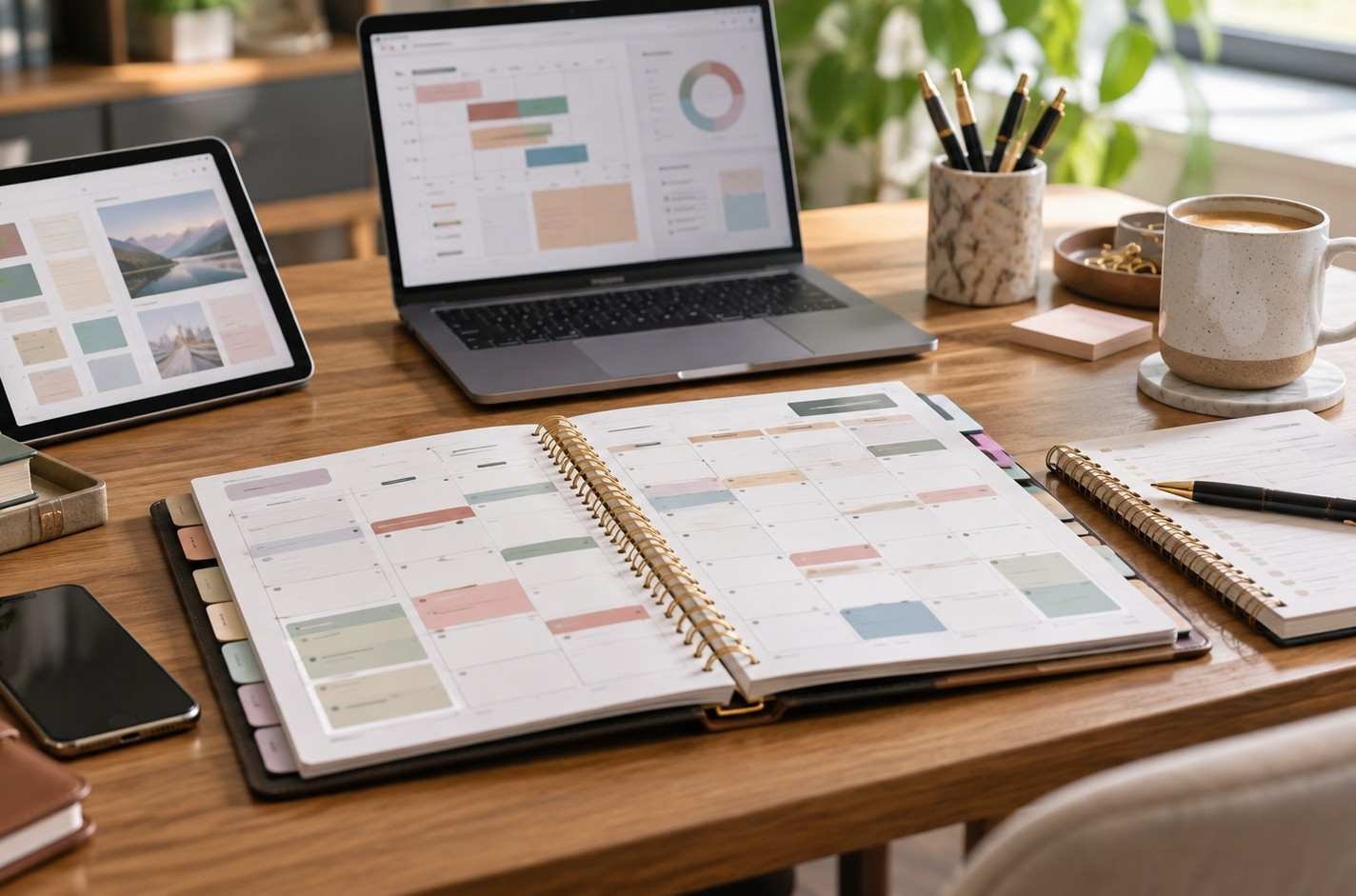
A year that goes well does not just happen. Your approach to scheduling and meeting management is completely transformed as soon as you stop reacting and start thinking ahead. First of all, you need to develop a tool that will enable you to view your time, priorities, and tasks within the same frame. Numerous digital calendars can assist you in that, but a paper calendar will allow you to overview the entire year in a glance and feel. This helps you plan things better.
For homes, people at work, and anyone who has a lot to do, 2027 Calendars can help you make a good base for your planning. The main thing is not just to pick a calendar because you like how it looks. You need to choose one that fits how you want to put down info, see your plans, and think about what comes next.
The Annual Organization Playbook
Think about planning for the whole year as a system with four parts.
See → Sort → Schedule → Review
1. See: Make Time Visible
Visibility is the key requirement for a planning tool. A wall calendar enables you to take an overview of the entire month at a glance. You can easily check your key dates, deadlines, meetings, holidays, family events, etc.
This wide look helps you see when things get busy early. That way, you know before it gets to be too much.
2. Sort: Match the Format to the Task

Different calendar formats work for different ways people like to plan.
| Format | Best suited to |
| Wall calendar | Monthly overview and shared planning |
| Desk calendar | Workspaces and daily reference |
| Page-a-day | Detailed daily focus |
| Magnetic calendar | Frequently updated household planning |
| Planner format | Combining schedules with written tasks |
Think about if you care most about visibility, portability, detail, or shared organization.
3. Schedule: Turn Priorities Into Actions
When you can see the important dates, put them into simple planning steps. Mark the deadlines first. After that, add things you need to do often. Then add your own goals and things that can be changed around.
A good rule is to not fill up every space in the day. If you leave some open time, you can take care of things that come up. This is better than making the calendar feel like more stress.
4. Review: Build a Monthly Reset
Organization is better when you do it again and again, not just one time each year.
At the end of each month, ask:
- What deadlines are coming soon?
- Which commitments can be changed or made easier?
- What needs to be done to get ready?
- Are priorities still the right ones?
- What things should go into the next month?
This quick check helps keep the yearly system running. It stops the system from fading into the background.
The Intentional Design Principle
A calendar can change the way people read and use information. A big monthly grid helps people look over lots of dates fast. A small format lets users find things quick. A calendar with more detail lets them write extra notes or details.
That means the look of a design is not just about style. Layout changes how people act.
That means the appearance of the design is more than just about aesthetics. The layout will affect how people behave.
The ideal calendar should be the one that fits the location where people plan their activities. This calendar should fit the environment for planning activities to be easy.
Conclusion
Intentional organisation does not mean you need to be in charge of every single day. It is about creating a helpful system that you can rely on throughout the year. Choosing the right 2027 calendars can greatly simplify your planning and help you stay organised and on track with your schedule. Along with following essential tips for business owners, selecting a calendar format and layout that matches your planning style can make daily organisation much easier. A calendar then becomes more than just a tool for checking dates; it becomes a practical resource that helps your entire year feel more structured and manageable.