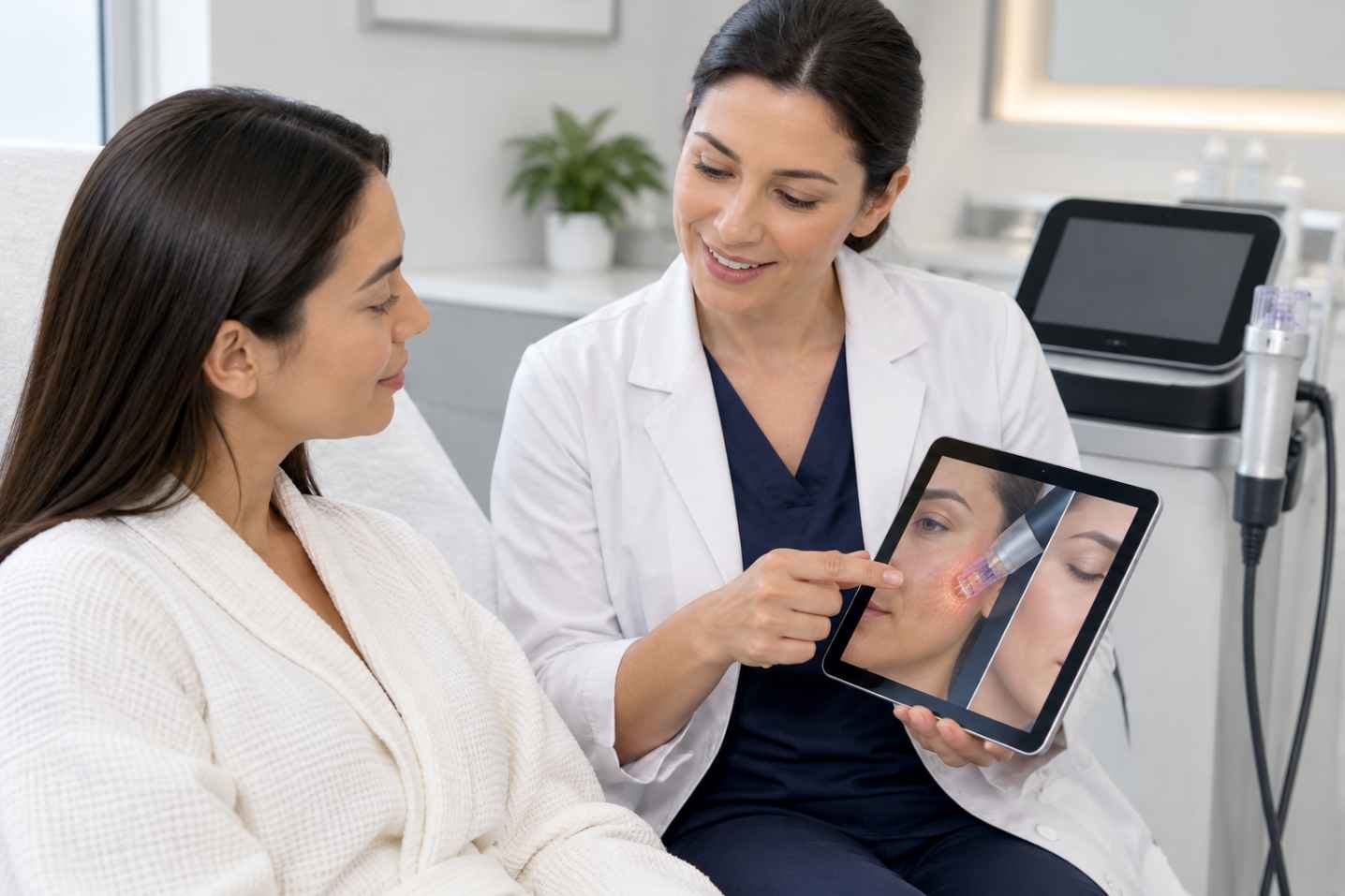
RF microneedling combines needles with radiofrequency energy and should be approached as a medical procedure. The consultation needs to address the exact concern, the device and settings proposed, and the clinician’s experience. A general interest in smoother or firmer skin is not enough to establish suitability.
Bring your skin and medical history, including previous procedures, healing problems, and medications. Ask the clinician to explain why this approach is being considered and whether a different treatment or no treatment would better fit your goals.
Discuss risks beyond temporary redness
The FDA has warned about serious complications reported with certain uses of RF microneedling devices, including burns, scarring, fat loss, and nerve damage. Ask how the practice assesses these risks and what would happen if a complication occurred. Do not rely on the phrase minimally invasive as a complete explanation of safety.
For people considering Morpheus8 in Salt Lake City, the key comparison is the specific medical plan and the professional responsible for it. Ask which device would be used, which areas would be treated, and what recovery and follow-up involve. Results and recovery vary. A consultation should leave you with a balanced understanding of the possible improvement and the reasons the procedure may not be appropriate for you.
Ask the practice to describe how it handles a concern reported after a patient has gone home. Who reviews a photograph or message, when would an in-person examination be needed, and how is urgent care coordinated? These questions help establish what follow-up means beyond a routine scheduled visit.
You may also want to ask how proposed settings and treatment areas are selected for your particular concern. The clinician should explain the recommendation in understandable terms rather than expecting you to evaluate technical parameters yourself. If the consultation relies heavily on photographs or promotional packages, request a clearer medical explanation. Take written information home before deciding if important questions remain unanswered.
Make the consultation a medical conversation

Explain what you hope to change in your own words. Bring a complete list of medications, supplements, allergies, previous procedures, and relevant health conditions. Include past reactions even when they happened years ago. The clinician needs this history to assess suitability and discuss whether another approach would make more sense.
Do not stop prescribed medication on your own to prepare for an appointment. Ask the treating clinician and prescribing professional how any proposed changes should be handled. A cosmetic consultation should leave room for questions and for a decision to postpone or decline treatment. Booking a consultation does not obligate you to proceed.
For those also exploring simple skincare practices, this olive oil and sugar scrub offers an example of a home exfoliation approach worth evaluating separately from professional procedures, particularly when considering individual skin sensitivity and appropriate skincare choices.
Ask how safety and follow-up are handled

Confirm who will assess you, who would perform the procedure, and what training and licensure apply to those roles. Ask about experience with the specific treatment and your concerns. Before-and-after photographs may support discussion, but they cannot predict your individual outcome.
Request a clear explanation of common side effects, serious complications, alternatives, and reasons the treatment may be unsuitable. Find out how to contact the practice after hours and which symptoms require urgent medical attention.
Patients exploring complementary skincare options can also learn about the rise of the LED neck mask to understand how at-home light-based devices are positioned within skincare routines and why their purpose, limitations, and suitability should be evaluated separately from professional RF microneedling treatments.
Having a follow-up plan matters even when the procedure is brief or marketed as requiring little downtime.
Bring these questions
- What improvement is realistic for my concern?
- Why is this treatment appropriate for my medical history?
- What are the meaningful risks and alternatives?
- What would recovery require from me?
- What costs and follow-up visits might be involved?
Allow time for an informed decision

Ask for written information to review after the appointment, including consent materials and care instructions. If you have an important event approaching, discuss timing before choosing a treatment date. Recovery and visible results vary, and a promotional estimate should not become a personal guarantee.
Choosing treatments thoughtfully also means considering how premium brands support healthier self-care through informed choices, quality considerations, and routines that align with individual needs rather than relying on marketing claims alone.
Price comparisons need context. Different plans may involve different areas, products, treatment settings, or follow-up arrangements. Understand the proposed plan rather than choosing solely by an advertised starting price. If the explanation remains unclear, request another conversation or an independent opinion. A useful consultation supports a thoughtful decision based on your goals, health, and comfort with the tradeoffs.
Describe the outcome you would consider satisfactory and the changes you would not want. That conversation is often more useful than naming a procedure based on social media. Ask the clinician to explain what the proposed treatment cannot accomplish. If several options are presented, compare their benefits, risks, recovery needs, and costs separately. You should be able to understand why a recommendation fits your situation before deciding whether the likely improvement is worth the commitment.
Arrange a consultation with Barr Facial Plastic Surgery to review RF microneedling’s suitability, alternatives, risks, and follow-up.