

It is a frustrating scenario that plays out in households every evening. A student spends hours staring at textbooks, completing homework, and attending class, yet their grades remain stagnant. They are putting in the effort, but the results simply don’t match the work.
When this happens, parents often wonder if their child is distracted, lazy, or simply not grasping the material. However, the issue is rarely a lack of intelligence or a lack of effort. More often, the culprit is a learning gap.
A learning gap refers to a discrepancy between what a student has actually learned and what they were expected to learn at a specific grade level. These are not just missing facts; they are structural weaknesses in a student’s academic foundation.
Like a crack in a windshield, a small gap in elementary school can shatter a student’s confidence and performance by the time they reach high school. Identifying these invisible barriers is the first step toward removing them. Here are five of the most common learning gaps that hold students back from reaching their full potential.
1. The Foundational Knowledge Gap
The most straightforward and common gap is a lack of foundational content knowledge. Education is cumulative, particularly in subjects like mathematics and foreign languages. If a student misses a core concept in 4th grade, such as how to manipulate fractions, they will inevitably struggle with algebra in 9th grade.
This creates a “snowball effect.” The student isn’t struggling because Algebra II is too hard; they are struggling because they are trying to build a complex structure on a shaky foundation.
Teachers in crowded classrooms must move at a set pace, often leaving students behind who haven’t quite mastered the previous unit. Over time, these small missed concepts accumulate until the student feels completely lost.
How to spot it:
If a student struggles with a new concept immediately and cannot explain the “why” behind the “how,” they likely have a foundational gap. They might memorize a formula but fail to understand the mathematical principles that make it work.
2. The Critical Thinking and Application Gap

Rote memorization can get a student through middle school, but it rarely survives the transition to high school or college. Many students are excellent at regurgitating facts but struggle to apply that knowledge to novel situations or complex problems. This is the application gap.
This disconnect becomes glaringly obvious during high-stakes testing. For example, families seeking SAT preparation in Menlo Park CA often find that while their students know the math formulas or grammar rules in isolation, they struggle to apply them to the tricky, multi-step problems presented on the exam.
The student knows the what, but lacks the critical thinking skills to handle the how and when.
How to spot it:
The student does well on vocabulary quizzes or basic calculation worksheets but performs poorly on word problems, essay questions, or comprehensive exams that require synthesizing information from different chapters.
3. The Executive Function Gap
Sometimes, the problem isn’t the material at all—it’s the management of that material. Executive functions are the brain’s management system, controlling skills like organization, time management, prioritizing, and initiating tasks.
A student with an executive function gap might be intellectually capable of doing the work but physically incapable of turning it in. They lose worksheets, underestimate how long a project will take, forget to study for tests, and live in a state of chaotic disorganization.
This is often mistaken for laziness or apathy, but it is actually a skill deficit. They haven’t learned the systems necessary to handle the increasing autonomy required in higher grade levels.
How to spot it:
Backpacks are messy, assignments are frequently “forgotten” at home, and big projects are started the night before they are due.
4. The Study Skills Gap
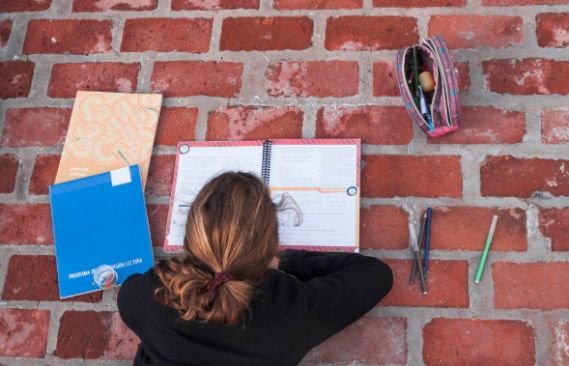
It is entirely possible to go through elementary and middle school without ever learning how to study. Bright students often coast on their natural ability to listen in class and retain information. However, when the curriculum becomes rigorous in high school, these students hit a wall.
They sit down to study, but they don’t know what that actually means. They might passively re-read the textbook or highlight notes, which are inefficient learning methods. They lack active recall strategies, don’t know how to space out their revision, and have no system for self-testing.
This gap leads to “illusion of competence,” where a student feels like they know the material because they read it, only to blank out during the actual test.
How to spot it:
The student claims to have studied for hours but still performs poorly on the test. They may look at a review sheet and say, “I know this,” without actually proving it by solving the problems without assistance.
5. The Confidence and Mindset Gap

The final gap is psychological. When students struggle with the gaps mentioned above for a long period, they develop a confidence gap. They begin to internalize their struggles, adopting a “fixed mindset.” They start believing statements like “I’m just not a math person” or “I’m a bad writer.”
Once a student believes they are incapable of learning a subject, they subconsciously disengage. They stop asking questions in class because they fear looking stupid. They stop trying on homework because they anticipate failure.
This emotional gap is often the hardest to bridge because it requires rebuilding a student’s self-image alongside their academic skills.
How to spot it:
Negative self-talk, avoidance of specific subjects, and high anxiety surrounding schoolwork or test days.
Closing the Gaps for Long-Term Success
Recognizing these gaps is the turning point for many struggling students. It shifts the conversation from “why aren’t you trying hard enough?” to “what tools are you missing?”
Bridging these gaps requires patience and a targeted approach. For foundational issues, it may mean going backward in the curriculum to relearn basic concepts. For executive function deficits, it means implementing strict organizational systems.
Whether through parental support, teacher intervention, or professional tutoring, addressing these root causes is the only way to ensure sustainable academic success.
Education is not a race to the finish line; it is a process of building a capable, confident learner. By identifying and filling these gaps, you give your student the solid footing they need to climb as high as they want to go.