

Working from home sounds like a dream—no commute, no office small talk, no fluorescent lighting. But for many people, the reality is a cycle of half-finished tasks, constant distractions, and an unshakeable sense that the day just slipped away.
The good news? You don’t need a complete lifestyle overhaul to fix it. Small, consistent routines can make a significant difference in how well you focus—and how much you actually get done.
Here are six that are worth building into your day.
1. Start with a “shutdown” ritual the night before

Focus doesn’t start in the morning. It starts the night before.
Before you close your laptop, take five minutes to write down your top three priorities for the next day. This simple habit clears mental clutter and gives your brain a clear target when you wake up. Instead of spending your morning figuring out what to tackle first, you already know.
Think of it as setting the table before dinner—everything is ready when you need it.
2. Create a consistent morning routine
A structured morning signals to your brain that work mode is beginning. It doesn’t need to be elaborate. Something as simple as making coffee, going for a short walk, and sitting down at your desk at the same time each day can create a powerful psychological cue.
The key word here is consistent. The more predictable your morning feels, the less decision-making energy you burn before your workday even starts.
If you live with a chronic condition and are seeking autoimmune disease help, establishing a gentle, low-effort morning structure can also reduce physical and mental stress—making it easier to ease into focused work without depleting your energy early.
3. Design a workspace that works for your brain
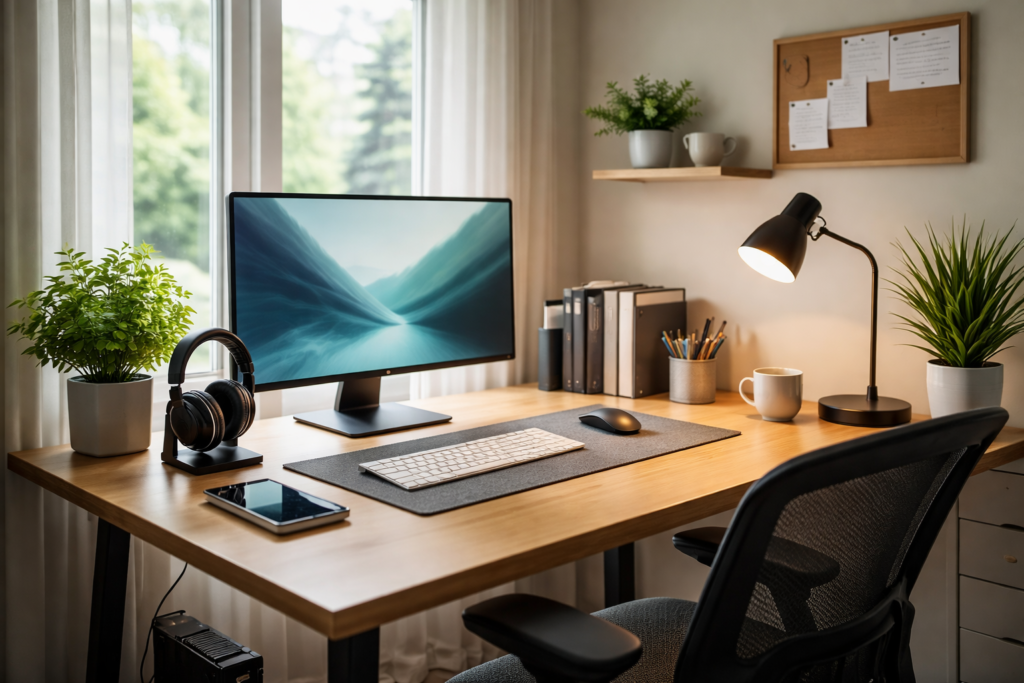
Your environment has a direct impact on your ability to concentrate. A cluttered desk, a noisy background, or the wrong lighting can make sustained focus feel like swimming upstream.
A few small changes that genuinely help:
- Reduce visual clutter: Keep only what you’re actively using on your desk.
- Use noise-canceling headphones: Background noise playlists (like brown noise or lo-fi music) can help drown out household distractions.
- Get the lighting right: Natural light is ideal, but a good desk lamp reduces eye strain and fatigue during longer sessions.
You don’t need a dedicated home office. Even a consistent corner of a room, set up the same way each day, can help your brain associate that space with focused work.
4. Work in focused blocks—not marathon sessions
Trying to focus for hours at a stretch usually backfires. Research consistently shows that the brain works best in shorter, concentrated bursts followed by brief recovery periods.
The Pomodoro Technique is one popular approach: work for 25 minutes, take a 5-minute break, and repeat. After four cycles, take a longer break of 15–30 minutes. This prevents mental fatigue from building up and keeps your attention sharper across the day.
The exact timing matters less than the principle: protect your work blocks fiercely and use your breaks to actually rest—step away from screens, move your body, or grab a glass of water.
5. Set clear boundaries with the people around you
One of the most underrated focus strategies is also one of the most uncomfortable: telling the people in your home when you’re unavailable.
Whether it’s a partner, a roommate, or a child, interruptions break your concentration and take longer to recover from than most people realize. Studies suggest it can take over 20 minutes to fully regain focus after a distraction.
A simple system—like a closed door, a “do not disturb” sign, or agreed-upon quiet hours—goes a long way. The conversation might feel awkward once. The uninterrupted focus time is worth it every day after.
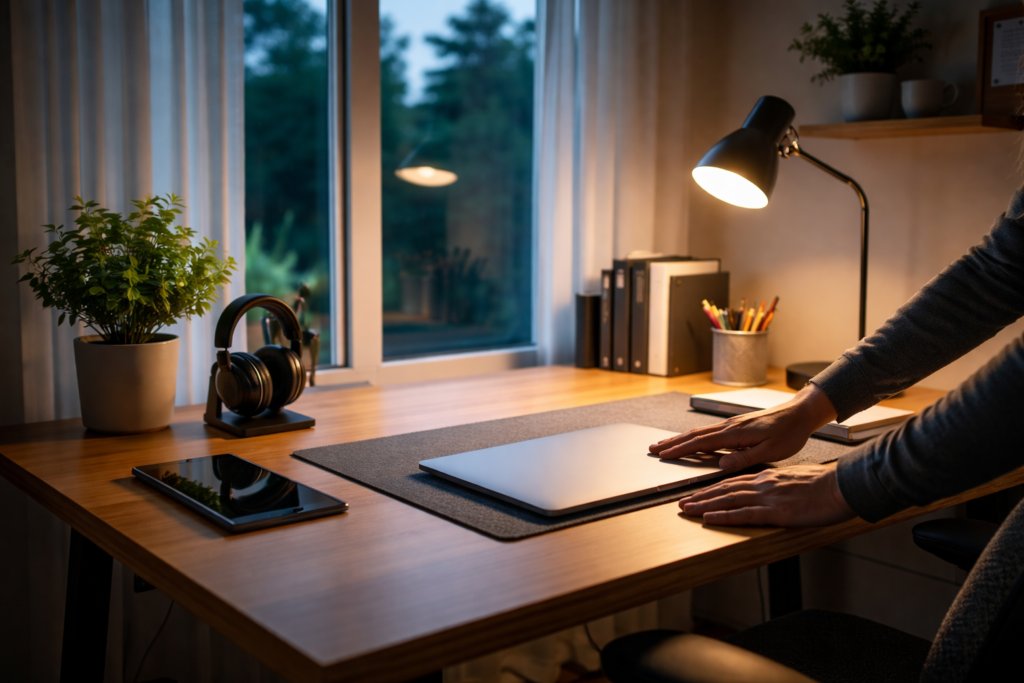
6. Build a proper end-of-day boundary
None of these habits require a personality change or a perfect schedule. Start with one. Pick the routine that feels most achievable right now, practice it for two weeks, and add another once it sticks.
Sustainable focus is built gradually—through small, deliberate choices repeated consistently. That’s true whether you’re brand new to remote work or have been doing it for years and are only now realizing the setup isn’t working for you.
The foundation is simpler than it looks. Start there, stay consistent, and over time these small routines can help you unlock best self, improving both your productivity and your overall well-being while working from home.
Build Your Focus, One Routine at a Time
None of these habits require a personality change or a perfect schedule. Start with one. Pick the routine that feels most achievable right now, practice it for two weeks, and add another once it sticks.
Sustainable focus is built gradually—through small, deliberate choices repeated consistently. That’s true whether you’re brand new to remote work or have been doing it for years and are only now realizing the setup isn’t working for you.
The foundation is simpler than it looks. Start there.