
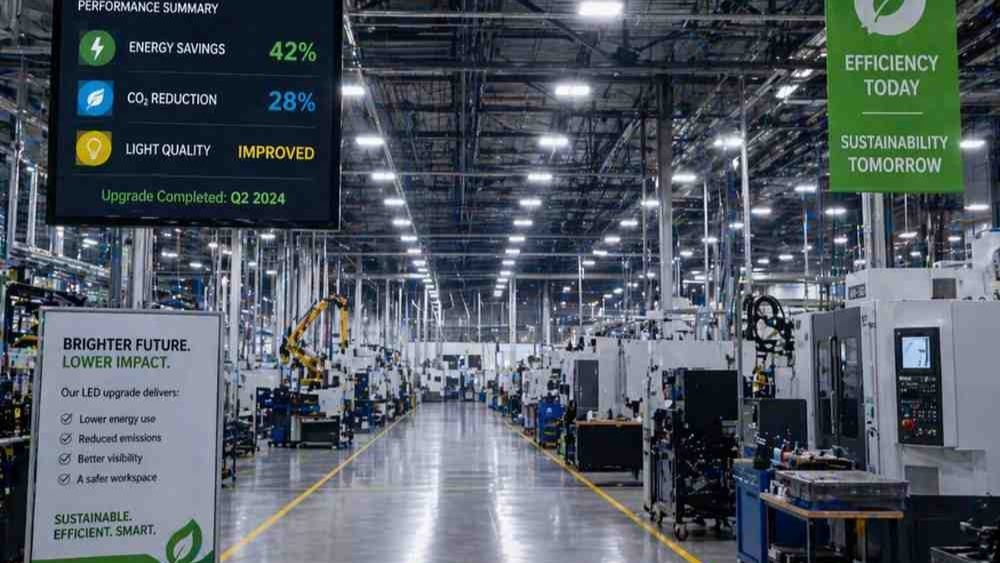
Industrial facilities consume a massive amount of power. Factories and warehouses serve as the backbone of global commerce, relying on heavy machinery, extensive lighting, and continuous climate control to keep operations running smoothly. All this daily activity requires a tremendous amount of electricity just to maintain baseline production.
Common Electrical Inefficiencies
Before a facility can improve its energy use, managers must identify where the power is going. Several common inefficiencies plague older industrial buildings.
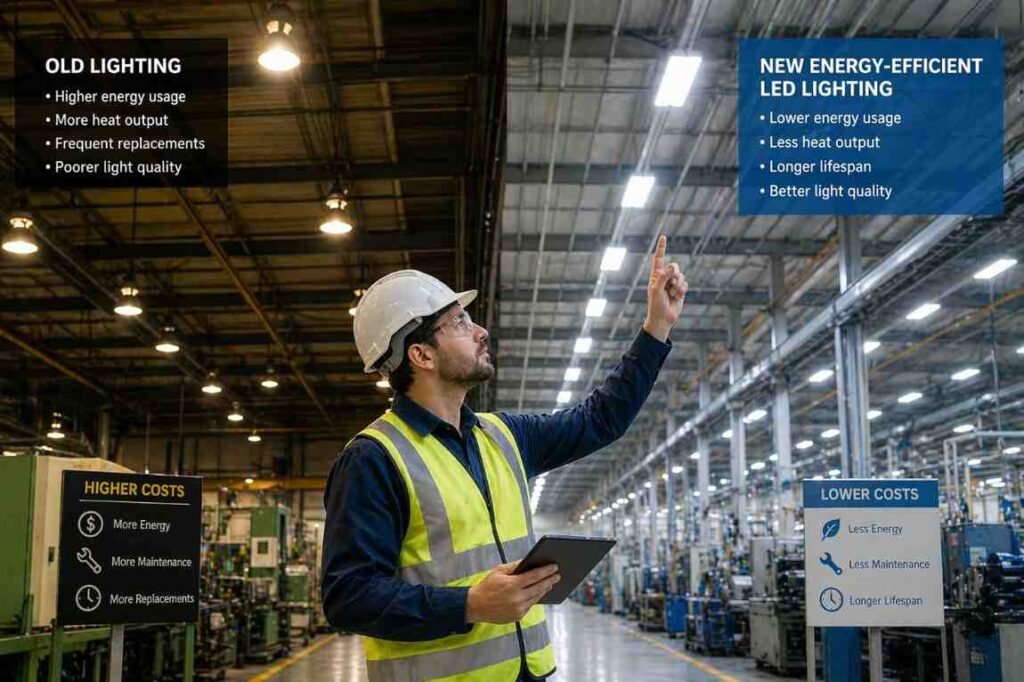
One major issue is outdated lighting. Many legacy warehouses still rely on metal halide or fluorescent fixtures. These lights consume a large amount of electricity and generate excess heat, which then forces the air conditioning system to work harder. They also tend to stay on constantly, even when certain aisles or zones are empty.
Another massive drain comes from industrial motors. Conveyor belts, pumps, fans, and compressors usually run on standard electric motors. Older models operate at a single, continuous speed regardless of the actual load required. If a conveyor belt is running empty, a single-speed motor still draws the maximum amount of power.
Facilities also suffer from poor power quality. When voltage drops or fluctuates, equipment runs less efficiently and degrades faster. This creates a hidden cost on monthly utility bills, often penalized by energy providers as a “power factor” charge.
Strategies for Optimizing Electrical Systems
Addressing these inefficiencies requires a systematic approach. Facility managers and new business owners employ several reliable methods to bring their electrical consumption under control.
Upgrading to LED Lighting
Replacing legacy lighting with Light Emitting Diode (LED) fixtures is one of the easiest ways to save electricity. LEDs use a fraction of the power required by older bulbs and last significantly longer. This upgrade directly reduces the wattage drawn by the lighting grid. Furthermore, LEDs produce very little heat, which slightly lowers the facility’s cooling requirements.
Improving Motor Efficiency
Since motors drive almost all mechanical movement in a factory, optimizing them yields massive savings. Facilities are replacing older units with high-efficiency motors designed to lose less energy to friction and heat.
To gain even more control, engineers install Variable Frequency Drives (VFDs). A VFD adjusts the speed of a motor to match the exact demand of the task. If a pump only needs to operate at half capacity, the VFD reduces the power supplied to the motor. This prevents the system from wasting electricity by running at full speed unnecessarily.
Implementing Solutions
Many organizations prefer to overhaul their energy systems all at once rather than piecemeal. Energy service companies offer turnkey solutions that handle the entire optimization process from start to finish. These providers conduct an initial energy audit, design the upgraded systems, install the new equipment, and handle the final testing. This comprehensive approach ensures that lighting, HVAC, and motor controls all work together efficiently.
The Role of Smart Technology and Automation
Modern energy management relies heavily on digital technology. Smart sensors and automated systems give facility managers unprecedented visibility into their electrical usage.
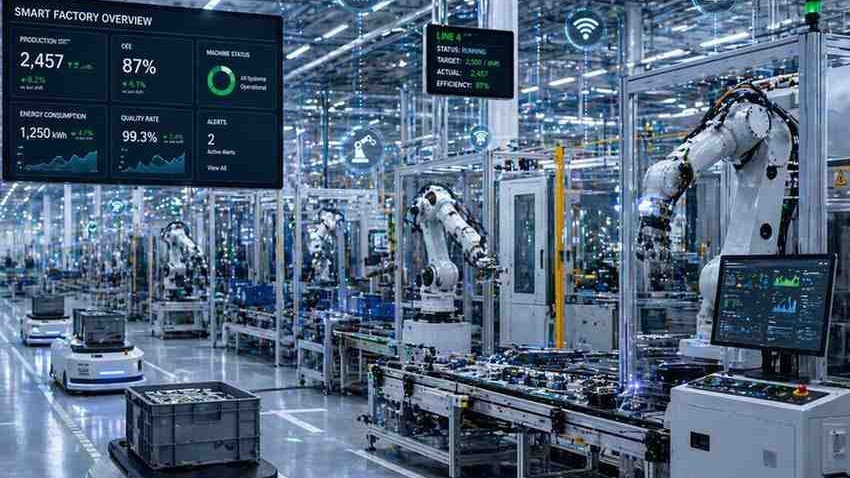
Internet of Things (IoT) devices can track power consumption at the machine level. Instead of just looking at a single monthly utility bill, managers can see exactly how much electricity a specific compressor uses on a Tuesday afternoon. This granular data helps pinpoint failing equipment before it breaks down completely, as a sudden spike in power draw usually indicates a mechanical problem.
Automation software ties all these sensors together into a centralized Energy Management System (EMS). The EMS can automatically dim lights in unoccupied zones, adjust thermostat schedules based on shift changes, and power down idle machinery. By removing human error from the equation, automation ensures the facility operates at peak efficiency around the clock.
Benefits of Improved Electrical Efficiency
Investing the time and capital to upgrade electrical systems pays off in several distinct ways.
Substantial Cost Savings
The most immediate benefit is a reduction in utility bills. Factories and warehouses operate on tight margins, and energy is often one of the largest overhead expenses. Slashing electricity usage by 20 or 30 percent frees up a significant amount of capital. Facilities also save money on maintenance, as modern equipment like LEDs and VFD-controlled motors experiences less wear and tear over time.
Sustainability and Compliance
Organizations are facing increased pressure from consumers and regulators to reduce their environmental impact. Optimizing electrical efficiency directly lowers a facility’s carbon footprint. Using less power from the grid means fewer greenhouse gases are emitted during electricity generation. Meeting these sustainability targets helps companies comply with strict environmental regulations and appeals to environmentally conscious partners.
Conclusion
Optimizing electrical efficiency is no longer optional for modern industrial facilities. Factories and warehouses that rely on outdated equipment and poor energy management will struggle to remain competitive. By upgrading lighting, installing smarter motor controls, and embracing automated energy systems, organizations can drastically reduce waste.